Future of Global Trade and Supply Chains 2026
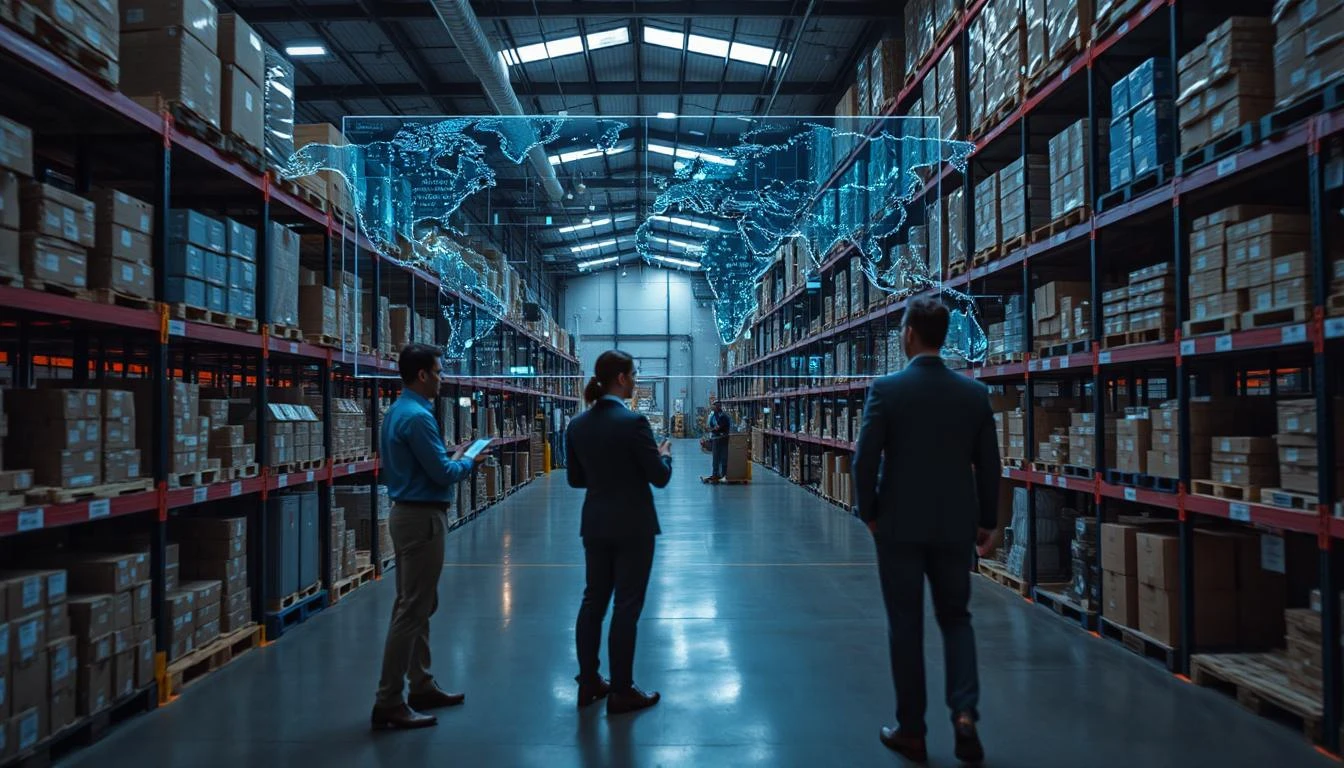
The global economy is entering a phase where boundaries feel thinner, yet competition feels sharper. Trade routes are no longer just physical corridors, they are becoming digital ecosystems shaped by algorithms, political recalibration, and real-time decision systems. Every shipment, contract, and supplier choice now sits inside a much larger intelligent network that reacts faster than traditional planning cycles.
What you are witnessing is not a gradual shift but a structural reconfiguration of how the world exchanges value. In this landscape, the global trade evolution 2026 is redefining how nations, corporations, and digital platforms interact, forcing businesses to rethink everything from sourcing strategies to market entry models.
Evolution of Global Trade Networks
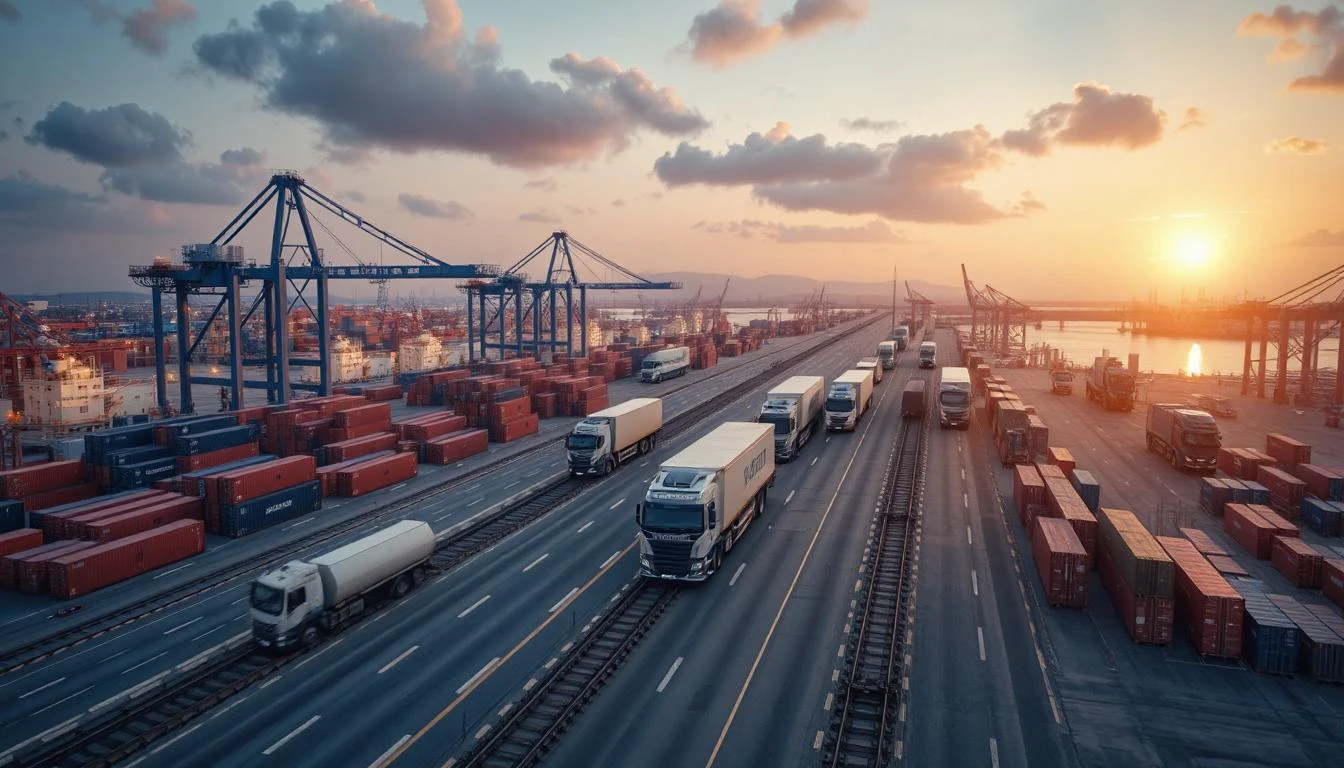
Global trade is no longer a fixed map of exporters and importers, it is becoming a fluid constellation of shifting alliances and adaptive production hubs. Companies are no longer asking “where is the cheapest place to produce?” but instead “where is the safest and most responsive node in my network?”
Within this transformation, supply chain trends 2026 are reshaping strategic decisions at the highest level. You can see how firms are balancing efficiency with resilience, building multi-regional supply webs rather than single-point dependencies.
The interesting shift here is psychological as much as structural. Businesses are beginning to treat disruption not as an anomaly but as a baseline condition of global trade.
Reshoring and nearshoring strategies
Reshoring and nearshoring are gaining momentum as companies move production closer to consumption hubs. This reduces exposure to geopolitical friction and transportation volatility. It also improves responsiveness to demand spikes that previously took weeks to manage.
Expansion of emerging markets
Emerging economies are stepping into more dominant roles, not just as manufacturing zones but as innovation contributors. Southeast Asia, Africa, and parts of Latin America are now critical nodes in global production chains, reshaping trade gravity.
Digital trade corridors
Digital trade corridors are turning customs, logistics, and payment systems into integrated digital flows. Smart contracts and blockchain verification are reducing friction, making cross-border trade feel increasingly seamless.
Economist Mariana López notes, “The future of trade will not depend on distance, but on data fluidity and trust infrastructure across borders.” That statement reflects how deeply digitization is embedded in modern commerce thinking.
Smart Supply Chain Technologies
Technology is no longer just supporting supply chains, it is orchestrating them. Decision-making is shifting from human intuition to machine-assisted precision, where algorithms continuously recalibrate logistics pathways.
A growing part of this transformation is tied to AI-driven supply chain optimization, which is redefining how inventory, transport, and demand forecasting operate across industries.
At the core, supply chains are becoming predictive rather than reactive, and this shift is fundamentally changing how risk and efficiency are balanced.
Real time logistics tracking
Real-time tracking systems now provide end-to-end visibility across global shipments. This transparency reduces uncertainty and allows companies to intervene before disruptions escalate.
AI driven supply chain optimization
Artificial intelligence is dynamically adjusting procurement schedules, warehouse distribution, and delivery routes based on live market signals and environmental conditions.
Predictive risk management
Predictive systems are identifying potential disruptions, political, climatic, or operational, before they fully materialize, allowing preemptive mitigation strategies.
Supply chain expert Daniel R. Whitmore explains, “We are entering an era where prediction is more valuable than reaction. Companies that anticipate will outperform those that simply respond.”
Risk and Resilience in Global Supply Chains
Global commerce has always carried risk, but the nature of risk is evolving. It is no longer isolated or linear, it is interconnected, cascading across regions and industries.
In this environment, geopolitical trade disruptions are becoming a central concern for multinational corporations navigating unstable regulatory environments.
Resilience is now measured not by efficiency alone, but by adaptability under pressure.
Geopolitical trade disruptions
Trade restrictions, sanctions, and shifting alliances are forcing companies to redesign supply routes in real time. Stability is no longer guaranteed, it is engineered.
Supply diversification strategies
Organizations are spreading sourcing across multiple regions to avoid overdependence on any single market, reducing vulnerability to localized shocks.
Crisis responsive logistics planning
Modern logistics systems are integrating crisis-response protocols that automatically reroute goods during disruptions, minimizing operational downtime.
What becomes clear is that resilience is no longer a contingency plan, it is a core design principle of global trade architecture.
Discover the Future of Global Trade in 2026
The next phase of global commerce is not simply digital, it is autonomous, interconnected, and continuously self-optimizing. Markets are becoming less predictable in traditional terms but more structured in algorithmic logic.
As digital trade ecosystems expand, businesses are required to think less about static supply chains and more about adaptive trade intelligence systems that evolve continuously.
You are entering a world where competitive advantage is defined by how quickly you can interpret and act on data, not just how efficiently you can move goods.
The global trade evolution 2026 and supply chain trends 2026 converge into a single reality: a world where agility, intelligence, and resilience define economic survival.